The music of The Way We Fall – “It’s Not”

The second song on The Way We Fall‘s unofficial soundtrack is Aimee Mann’s “It’s Not”:

To me, the tone and the lyrics of this song capture Kaelyn’s state of mind before the beginning of the novel. When she moved away from the island to the big city with her family, she was intimidated by the groups of kids who were already friends, and so she got stuck in the role of a loner. It wasn’t making her happy, especially when she couldn’t talk to her best friend Leo back on the island all that often, but once she’d been keeping her distance from people for a while, she felt paralyzed in that pattern (“I keep going round and round on the same old circuit”). In fact, she was depending on Leo for emotional support too much, which led to their falling out (“I believe it’s you who could make it better/though it’s not”). And even when she moves back to the island, she finds it hard to break out of those now-ingrained habits and reconnect with the people who used to be her friends (“I keep waiting for a change but I don’t know what…/I’m just frozen here in the same old spot”).

All of which is why, when the novel starts, Kaelyn is determined to make that change happen. She’s still nervous about opening up to people (“People are tricky, you can’t afford to show/anything risky, anything they don’t know”), but she’s gotten to the point that she’d rather take that risk than stay isolated. Of course, then the virus comes along, and makes isolation one of the few safe ways to stay alive…

Get The Way We Fall signed — anywhere in the world!

Because many of my friends and readers live nowhere near the Toronto area (really, you should all move here — it’s an awesome city!) and so weren’t able to attend my launch party, I’ve decided that for the rest of the first month of The Way We Fall‘s release, I will offer book signings by mail! That is, you will get a lovely signed and personalized bookplate to go inside the book:

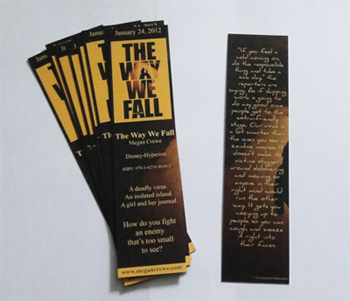
And one of these fine bookmarks:

Bought the ebook version and have nowhere to stick a bookplate? I’m happy to just send you a signed bookmark if you’d like!

How can you get your bookplate and/or bookmark? Just email me with a scanned, photographed, or forwarded copy of your receipt for your copy of The Way We Fall (you may of course delete or black out any personal info) and your mailing address, by Feb 24th.

Open to readers worldwide!

Note: If you can’t find the book in a store near you, BookDepository is a great option, especially for international readers, as it offers free shipping to most countries.

Launch!

Yesterday I had an absolutely wonderful launch party for The Way We Fall, at Bakka-Phoenix Books in Toronto. Thank you so much to everyone who could make it!

My husband was able to snap a few pics:


(Store window display)


(Chatting with early launch arrivals)


(Reading from the book)


(Signing!)


(My friend Frances from kung fu class stopped by — women martial artists unite!)


(My day job employers showed up in support)

My friend and photo enthusiast Debbie Ohi is sharing many more pictures here on Flicker!

If you’re in the Toronto area and you missed the launch, you can still get a signed copy of The Way We Fall. Just stop by Bakka-Phoenix (84 Harbord St., just west of Spadina) and ask!

The Ways We Struggle – Leah Cypess

Click here for an explanation of the The Ways We Struggle guest post series.

This week we’re hearing from Leah Cypess, author of the YA fantasy novels Mistwood and Nightspell. Leah’s studied biology and law, and she lives in Brookline, Massachusetts (right outside of Boston) with her husband and their three children. She sold her first short story while in high school. And she’s struggled with something I suspect almost all of us, authors or not, do: jealousy.


What I Struggle With by Leah Cypess

This is a very personal post, and one I was thinking about not putting up. I was going to write about how I struggle with deadlines (true) or getting enough sleep (oh so so true) or any of the dozens of things I struggle with on a constant basis. And any of those posts would be honest. But those are things I’ve struggled with all my life, whereas since becoming a published writer, I’ve had many triumphs and joys and ups and downs, but one main new area of struggle.

Jealousy.

It may sound weird, but growing up, I was never jealous. I didn’t even really understand jealousy. Obviously, I wasn’t the smartest or the prettiest or the most successful, and of course I wanted to be smarter, prettier, and more successful – but this never translated into jealousy for the people who had the things I wanted. They had them; I didn’t. Whether or not they had these things hardly seemed to have any bearing on whether I did. And even in cases where it was a competition, for some reason it was never personal to me.

When I was in high school, a friend told me she had listened to a fantastic speech by a rabbi she liked on the subject of envy and how to deal with it. She gave me a cassette tape (yes, really) of the speech, and I took it, but I never got around to listening to it. It may sound difficult to believe, but envy was something I’d truly never experienced.

Which meant when it hit me, it came as a complete shock.

As a published author, I spend a fair amount of my time (probably too much – that was another possible post) hanging out online with other writers. Writers’ groups, listserves, facebook, twitter, blueboards. And in these places, you are always hearing about other peoples’ good news. About books hitting the NYT bestseller list, receiving awards, getting on state lists or indie lists or ALA lists. And even when I like the author and/or love the book, I noticed a little twinge each time, a tiny voice whispering, “Why not my book?” (And when I didn’t like the book, and am at a loss as to why it is getting so much acclaim… well, let’s not even get into that. It does not bring out the best part of my nature.)

So at some point last year, I found that tape (which is now, of course, available as an MP3) and listened to it.

This particular rabbi had two answers for people looking for ways to combat their own feelings of jealousy. The first is a religious one: that envy can be combated by faith. If you truly believe that God has given you what you need and put you in the place where you need to be, then it makes no sense to be envious of what He has given someone else. Now, I realize that’s an answer that’s not going to work for everyone. But I think it can be made more universal, at least for writers, by translating it into faith in your book. Not necessarily that it’s the most perfect book or the best book, but it’s your book; it’s the book that only you can write, that would never have been written if you hadn’t written it, and the readers who read it and loved it and sighed happily at the end – or had deep thoughts about it, or cried over it, depending on the book – would never have had that experience if not for you.

The second answer is actually a Yiddish expression, which can be loosely translated as, “If everyone put their baggage on the table, everybody would take back their own.” (Like all Yiddish expressions, it loses a lot in translation. At least, so I’m told, repeatedly, by people who speak Yiddish.) The idea is that every person has their share of joy and sadness in life, and if we all knew the full truth about everyone else’s lives, and could choose the life we wanted, we would choose our own.

Heretical as it might be to deny the truth in a Yiddish expression, I don’t actually believe that this is universally true. But for most authors, I think this is a useful way of looking at things, because it is so easy for us to compare ourselves to the few books that do amazingly well – when, in fact, the vast majority of books do not. When, in fact, the majority of books – even good books – don’t get published at all.

I know phrases like “Count your blessings” or “Be happy with what you have” can come off as ways of trying to minimize someone’s pain. But there is wisdom in them nonetheless, when they’re used appropriately. Because here are some things I didn’t put on the list of other writers’ accomplishments that have made me jealous: Making a “best of” list. Getting starred reviews. Earning out. Why didn’t I put them there? Because those are things at least one of my books has done. Why do the things I have done seem less important to me than the things I haven’t done?

Not only that: there are authors who haven’t done the things I’ve done, who might be jealous of me. I hope not, but why shouldn’t it be true? And I hate that thought, because I’m just like them, a writer who loves her books and wants them to do the best they can but is ultimately helpless to do anything about how they fare in the marketplace/ALA committees/whatever. And you know what? The writers who have done the things in the first list – hit the NYT list, gotten awards, gotten nominated – they are exactly like me, too. They just want their books to do the best they can and are thrilled by whatever successes come their way.

At the end of the lecture I was listening to, the rabbi gave one final piece of advice: that your faith (or whatever it is that gives you strength) has to be something you work on internalizing during the good moments, or the uneventful moments. The understanding that helps you combat jealousy has to already be in place when you need it.

So ironically, I find that the best way to combat jealousy is to do exactly what got me into trouble in the first place: hang out with other writers, usually online, and get to know them. To understand that their triumphs make them as happy as my triumphs make me, while their disappointments are just as disappointing. And with that friendship and commonality to bolster me, I hope I can become someone who rejoices wholeheartedly in others’ success; someone who can silence, or at least muffle, that little voice of jealousy.

View all the The Ways We Struggle posts so far.

The first The Way We Fall sequel post

A few readers have been wondering whether The Way We Fall will have a sequel. Indeed it will! In fact, it will have two — it’s the first in a trilogy. (I didn’t actually intend to write a trilogy; it just sort of happened, as I explain here.)

Book 2 is written and edited and with the copyeditor right now. I was just working on the jacket flap copy (i.e., the book description) with my editor yesterday. Now, I’m not going to share that with you yet, because it gives away far too much about the first book. But I can now officially reveal the title!

The second book in the (not-yet-named) trilogy will be called…

The Lives We Lost

(I also know the title to Book 3, but it hasn’t been confirmed yet and probably won’t be until around this time next year. So all I can say is it follows the same pattern of The [noun] We [Verb].)

A few non-spoilery facts about The Lives We Lost:

-It begins with one last brief journal entry, and the rest of the book is in regular first person, from Kaelyn’s point of view.

-The reason it isn’t in journal format is that this book has quite a bit more action than TWWF, and I felt the format wouldn’t work believably with the story.

-The character Kaelyn sees at the end of TWWF plays a major role in this book.

-You will get to see what’s happening outside the island.

I’m so looking forward to getting to share more of Kaelyn’s story with you!

Creepy disease post: Plague

The virus in The Way We Fall is totally made up, but there are plenty of super-creepy sicknesses that really do exist. Over the next several weeks, I’m going to fill you in on some of them. (Those with hypochondriac tendencies may want to skip these posts. 😉 )

To start, let’s go back to possibly the best known disease in history…

Disease name: Plague (a.k.a. “The Black Death”)

Caused by: The Yersinia pestis bacteria, most often carried on rats and spread to people through flea bites, but can also be transmitted via physical contact (direct or indirect) and through the air.


(Yersinia pestis, magnified)

Symptoms: Depending on the type of plague and the stage, painfully swollen lymph nodes, chills, fever, headache, weakness, aches, rash, and coughing or vomiting blood.

History: There’s some debate about whether all of the epidemics that we attribute to the plague in the past were actually caused by what we consider plague today. Descriptions of symptoms from hundreds of years ago are sketchy and few between, and there were many other deadly diseases that spread through populations quickly from time to time. However, plague is generally accepted to be the cause of the massive pandemic that swept through Asia, Europe, and Africa in the mid-1300s, where it had an immense death toll: an estimated 1/2 of China’s population, 1/3 of Europe’s, and 1/8 of Africa’s died during those five years, which amounts to between 75 and 100 million victims and about 1/5 of the entire population of the world at that time.

Sporadic smaller outbreaks continued to occur for centuries after the initial pandemic.

Current status: Very rare in most of the world now, but there have been occasional cases reported in the United States, and brief outbreaks have been seen in various countries including India, the Congo, Madagascar, China, and Peru.

Creepy factor: For starters, this is a disease so virulent it killed tens of millions of people in five years. Yikes! All forms of plague have an incredibly high mortality rate. The most common bubonic form (affecting the lymph nodes) is fatal in about half of all cases if untreated. Much scarier? The septicemic (affecting the blood) and pneumonic (affecting the lungs) forms are essentially a death sentence if untreated–their mortality rates are almost 100%. Both can come on incredibly fast–you can die on the same day the symptoms first appear. So while treatment may increase your chances of survival, you have to get it fast. And those forms also spread more easily. When plague turns pneumonic, it goes airborne, as those infected cough the bacteria out of their lungs.

Also creepy: most people think of plague as something of the past. But as I mentioned above, it’s still popping up here and there throughout the world. These days, better hygiene and city cleanliness make it harder for the disease to spread, and better hospital facilities make it easier to treat. But what if that bacteria mutated? *shudders*

If you want to learn more: Not creeped out enough yet? Fictional accounts of plague include Connie Willis’s Doomsday Book and Albert Camus’s The Plague (both the inspirations for The Way We Fall), as well as a YA novel I loved as a teen, Jill Paton Walsh’s A Parcel of Patterns. For the facts, one of my reference books, Dorothy Crawford’s Deadly Companions, examines the plague as well as several other deadly diseases in history. (I’m sure there are many other great nonfiction books on the subject, but I can’t recommend others specifically since my research focused on viruses.)


The music of The Way We Fall – “Crowd Surf Off A Cliff”

I’ve talked before about making playlists for my books as I’m working on them, and how those help inspire me. Now that The Way We Fall is out, I’d like to share each of the songs on its unofficial soundtrack with you, and discuss how they relate to the story. (I’ll try to keep spoilery details out for those who haven’t gotten a chance to read it yet.)

The first song on the soundtrack is the one I consider the theme song for the entire book: “Crowd Surf Off A Cliff” by Emily Haines & the Soft Skeleton. I stumbled on this song while I was still in the brainstorming stage, and it fit the story so perfectly I must have listened to it at least a hundred times while outlining and drafting:

The song works with the novel on so many levels. The sad, softly insistent piano echoes the gradually growing tension of the situation on the island. The lyrics reflect Kaelyn’s feelings of isolation, her missing the boy who’s left her behind, the uncertainty of the townspeople’s attempts to survive (“Are we breathing, are we breathing/Are we wasting our breath”), and the horror of their situation (“All the babies tucked away in their beds/We’re out here screaming/The life that you thought through is gone”). And the cliff mentioned in the chorus — well, if you’ve finished the book, you’ll know the significance.

Emily Haines’ music suits the entire trilogy incredibly well. A couple of her other solo songs are on the playlists for books 2 and 3. The full book playlist (I narrowed it down for the unofficial soundtrack — there are 34 songs total) also has a song by her band, Metric, that’s well worth a listen: “Help I’m Alive” (Acoustic).

Infect Your Friends: A The Way We Fall Giveaway! – Until Feb 8th

**Deadline is passed; giveaway now closed. Thanks to all who participated! There’s a new giveaway happening here!**

With The Way We Fall just out, I think it’s time for one super huge giveaway!

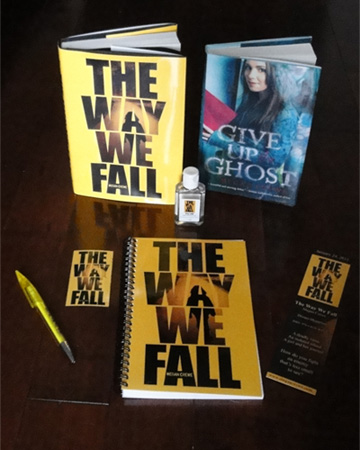
What’s up for grabs? Take a look:

-Signed copy of The Way We Fall (or ebook if you prefer)*
-Signed copy of Give Up the Ghost (or ebook if you prefer)*
The Way We Fall notebook, pen, magnet, bookmark, and hand sanitizer.
-Not pictured, iTunes mp3s of the unofficial The Way We Fall soundtrack songs.

And guess what? I’m giving away SIX of these sets!

*If you win and you already own one or both of these books, let me know and we’ll figure out an equal alternative.

How can you be one of the six people winning this prize pack?

The Way We Fall is all about infection — the virus spreading through Kaelyn’s town as it infects her neighbors, friends, and family. To enter this giveaway, I need YOU to infect people. But in a fun way, nothing deadly!

1. Make a post about The Way We Fall on Facebook, Tumblr, and/or your blog. The post must contain the book’s title (The Way We Fall), my name (Megan Crewe), and a mention that I’m giving away copies with a link here (http://www.megancrewe.com/blog/?p=1659 ). Other content is up to you! Say why you want to read the book or why you enjoyed it if you already have. Share favorite quotes (I don’t mind if you quote from the ARC or egalley), link to the excerpt if you like. Discuss survival strategies or makes epidemics so scary. Include the cover, the book trailer, or some of the behind the book info. You can stick to the basics if you prefer, but creativity will help you win. You want to catch other people’s interest — to infect them! — after all.

2. Let me know where you’ve made your post(s) using the “I’m Infecting My Friends!” form below. (If you are having trouble getting the form to work, email me directly with the subject like “I’m infecting my friends!” and a link to your post(s).)

3. The morning after the giveaway ends, I’ll check all the posts. Each comment, like, share, and reblog equals one person infected. (Note: I will not count comments from yourself.) The poster who has “infected” the most people on a given platform (blog, Facebook, or Tumblr) automatically wins a prize pack! One winner per platform = three winners total.

What if you enter later on, or you don’t have many followers yet? I’ll also award one prize pack to the remaining participants in each platform, by random draw! You will be entered in the draw as long as you have “infected” at least five people. One winner by draw per platform = three more winners!

Additional details:
-The virus in The Way We Fall incubates for an average of ten days after infection before symptoms emerge. So entries will be accepted for ten days, until 11:59pm EST on Wednesday February 8th.
-You may post (the same post, or different ones) on two or all three platforms — it will increase your chances of winning! However, if you have “infected” the most people on more than one platform, you will only win one prize pack, and the other will go to the person with the second largest number.
-This giveaway is open to all readers (including previous giveaway winners) around the world.
-If you have any questions, please ask them in the comments on this post.

That’s all there is to it. Infect away!

If you want to confirm that your entry was received, comment below and I’ll let you know.

The Ways We Struggle guest series – Struggling To Be by Janet Gurtler

Today I’m pleased to be introducing a series of guest posts you’ll see here on my blog between now and April: The Ways We Struggle.

The idea for the series came about through the meeting of two thoughts. One was that The Way We Fall is all about different kinds of struggles — Kaelyn’s struggle to survive, to protect her friends, and to keep hope, and also her initial struggle to get past her social anxieties and become a person she’s happier being. The other thought was that, as an author, I often shy away from talking about the difficult parts of my life, and I’ve heard many other authors mention doing the same. I think most of us — maybe most public figures in general — feel we need to put forward a positive front, so we don’t come across as whiny or ungrateful for the many great things we do have. Yet I know that I find it incredibly inspiring to see someone talking about things they’ve struggled with, and either continue to deal with or have overcome. And I suspect I’m not the only one.

So I asked several awesome authors if they would be willing to write about what they’ve struggled with, and happily most of them agreed! Every Friday for the next few months, they’ll be sharing their stories. I hope you’ll find them as inspiring as I do.

~~~

The first The Ways We Struggle post is coming to you courtesy of Janet Gurtler, author of the contemporary YA novels I’m Not Her and If I Tell, and the upcoming Who I Kissed. Janet lives in Calgary Alberta, near the Canadian Rockies, with her husband and son and a chubby Chihuahua named Bruce. She does not live in an Igloo or play hockey, but she does love maple syrup and says “eh” a lot. Today she reveals that what she’s most struggled with is her own self.


Struggling To Be by Janet Gurtler

It’s kind of amusing to me that I had to twist my brain to decide which struggle in my life to write about. It seems like there’s just so many darn choices. Which is kind of funny because that also made me worry that I’m kind of a cry baby about things. Because really, in the overall scheme of life, I’ve got it pretty good. I have my health, my family is healthy and as far as the big picture goes, I do not want for things. I’ve got it pretty good compared to many others. And that is not a braggy braggster comment. I’m thinking of people who don’t have homes. People who have lost limbs or loved ones. People who have terminal illness. Limited time to live. Poverty. Hunger. Those are true struggles.

And yet, big or small, there’s so many ways we can struggle in the world. I know, because I’ve done it. And so in my quest to write about struggling, I turned to the literal definition of struggle to see where I sat. (Yes. I googled it.)

Verb: “To make forceful or violent efforts to get free of restraint or constriction.”
Noun: “A forceful or violent effort to get free of restraint or resist attack.”

Oh my. Now those are juicy definitions for a word that I’ve always imagined as kind of flat and passive. I do like the image of being forceful about freeing myself from a struggle. Forget something like the difficulty of losing those last ten (okay maybe 20 these days) pounds. I can’t be violent about that. I can’t say it’s a struggle to lose weight when in my case it’s more that I don’t want to have to give up the food I love. No violence there. Choice. I exercise. I drink lots of water, but I really don’t want to restrain my sweet tooth. So I’m not really struggling.

I think my struggles in life have always had more of an internal slant. Lack of confidence. Sometimes I am my own worst enemy.

I am a person with a very addictive personality. I know that about myself now and I’ve learned to respect it. But when I was younger it wasn’t as easy. When I picked up my first cigarette, I had no idea how difficult it would be to kick the habit once I had it. Quitting smoking was truly a struggle. The addiction itself was partly emotional and self-inflicted, yes, but it took serious effort to break free of that nasty nicotine addiction. It’s been almost 15 years.

The same with drinking. I was never a person who drank every day. But I was that person we all know, the one whose personality completely changes after a few drinks. And not in a good way. And for whatever reason, genetic or whatever, once I had one drink I lost control. I lost the ability to stop. I was very shy as a teenager and young adult, but alcohol gave me liquid courage. I struggled to accept myself for who I was, versus the person I wanted to be. Alcohol made me who I thought I wanted to be. Except it didn’t. And that led to bad choices. And even lower self-esteem.

It took a lot of time and yes, a lot of struggle to walk away from drinking. Almost 17 years ago. It is the one thing in my life I think I am most proud of, but that I don’t talk about very often. It’s not who I am anymore. When I stopped drinking, I stopped hating who I was. I learned to respect myself. To believe I was an okay person. It led me to become the person I really was and to accept that person. It eventually led me back to writing. It was worth the struggle. I freed myself from the restraints. Now if only I could give up carbs.

Picturing The Way We Fall‘s characters

When I’m getting ready to write a new story, I often have a much easier time figuring out the characters’ personalities and voices if I can form a picture of them in my head. Some characters arrive with a distinct physical presence — I knew what Cass from Give Up the Ghost looked like before I was totally sure what her story was — or immediately bring to mind a particular actor or public figure. Others are more ephemeral, so I browse through scores of photos online until an image clicks. Either way, by the time I sit down to write, I can “see” all of the major characters.

If you’d like to find out how I “saw” some of the main characters from The Way We Fall, click on the links below to see the pictures.

Kaelyn

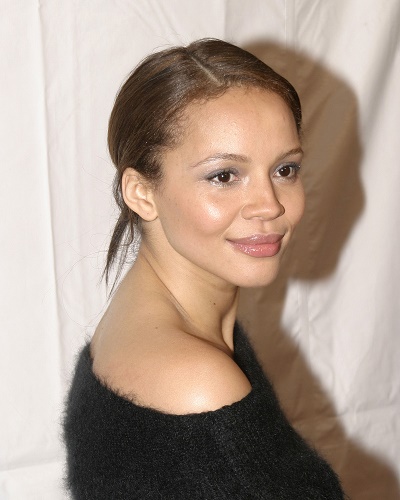
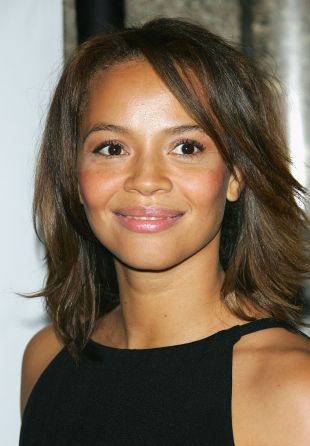
The Kaelyn in my head looks a lot like actress Carmen Ejogo. She’s younger, and her hair would be un-highlighted, and she’s not actress-level pretty. But otherwise, that’s her!

See pictures of Carmen Ejogo here and here.

Tessa

I’ve always pictured Tessa as looking quite a bit like actress Bonnie Wright, but I didn’t actually track down a specific photo of Wright until I was putting together this post. It was a little hard to find one that completely fit my image of Tessa. She needed bangs, and she shouldn’t be wearing a noticeable amount of make-up, and she’d look fairly serious. I’d say this one comes the closest, though my mental Tessa is a little paler and has more freckles.

Gav

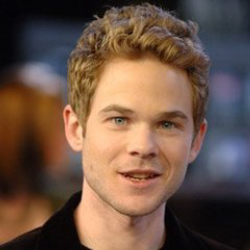
My image of Gav is a composite — his face reminded me of actor Logan Lerman, but his hair was light brown and curly. Rather like Shawn Ashmore’s! Mash them together, and you pretty much have Gav.

Leo

Leo only appears in The Way We Fall in flashback, but he’s so important to Kaelyn I needed a visual impression of him. My searching brought me to actor Jang Geun Suk. I wanted to be able to see both the happy-go-lucky side of Leo and the more serious side.

That may be how I saw the characters, but I’m sure every reader pictured them differently. I’d love to know, how close were my images to what you imagined?